
Are you looking to start an organic fertilizer business and tap into a fast-growing, sustainable industry? The global organic fertilizers market is experiencing strong expansion, with recent estimates valuing it between USD 9-14 billion and projected growth at a CAGR of 6-11% in coming years, potentially reaching USD 17-26 billion or more depending on various forecasts. This surge is driven by increasing demand for organic food, stricter regulations on chemical fertilizers, growing concerns over soil health, and widespread support for eco-friendly farming practices.
Farmers, gardeners, and commercial growers are increasingly turning to organic fertilizers to enhance crop yields sustainably, improve soil structure, and reduce environmental impact—creating excellent opportunities for entrepreneurs. Whether you’re producing compost-based powders, nutrient-rich granules, or easy-to-apply liquid formulas from animal manure, crop residues, food waste, or other organic sources, this business offers low-cost raw materials, attractive profit margins, and meaningful environmental benefits.
This comprehensive guide walks you through everything needed to launch an organic fertilizer production business—covering market research, business planning, regulations, equipment selection, production setup, and effective marketing strategies. With the right approach, you can build a profitable, purpose-driven venture in this thriving sector.
Rising Demand and Market Potential for Organic Fertilizer
The global demand for organic fertilizer is experiencing a significant surge as farmers and agricultural stakeholders increasingly prioritize soil health and sustainable farming practices. By 2026, the organic fertilizer market is projected to grow at an impressive rate of 14% to 16% worldwide. This growth is driven by a global shift towards sustainable agriculture, export-grade crop production, and large-scale soil restoration programs.
Factors Driving the Demand
Several key factors contribute to the rising demand for organic fertilizers :
- Soil Health Prioritization : Farmers are recognizing the detrimental effects of chemical fertilizers on soil quality and are switching to organic alternatives to restore and maintain healthy soil ecosystems.
- Sustainable Agriculture Practices : There is a growing global movement towards sustainable farming that emphasizes ecological balance, reduced chemical use, and enhanced biodiversity.
- Export-Grade Crop Requirements : International markets demand high-quality, chemical-free produce, encouraging farmers to adopt organic fertilizers to meet these standards.
- Government Support and Grants : Many countries in Asia, Africa, the European Union, and the United States offer financial incentives, grants, and subsidies for composting units, vermicomposting farms, and biofertilizer projects, making the business easier to start and scale.
- Awareness of Soil Damage : Increased awareness of the long-term damage caused by chemical fertilizers has pushed numerous farms, nurseries, landscapers, greenhouse owners, urban gardeners, and municipal parks toward organic solutions.
Market Segments Benefiting from Organic Fertilizers
Organic fertilizers are becoming essential across various agricultural and horticultural sectors, including :
- Commercial Farms : Large-scale farms switching to organic inputs for healthier crop yield and soil preservation.
- Nurseries and Garden Centers : These establishments prefer organic fertilizers to promote the growth of healthy plants free from chemical residues.
- Landscapers and Greenhouse Owners : Professionals managing ornamental and edible plants increasingly demand organic options for sustainable maintenance.
- Urban Gardeners and Municipal Parks : Community gardens and public green spaces are adopting eco-friendly fertilizers to maintain soil vitality and environmental health.
Raw Material Availability and Cost Advantage
One of the biggest advantages of starting an organic fertilizer business is the easy availability and low cost of raw materials. Common raw inputs include :
- Cow dung
- Plant residues
- Kitchen waste
- Crop leftovers
- Poultry litter
These materials are often free or available at extremely low costs, drastically reducing the initial investment and production expenses, which in turn lowers business risk. This accessibility allows entrepreneurs to produce organic fertilizer at a minimal cost per ton, often between $20 to $50, including labor and electricity.
Consistent Year-Round Demand and Profitability
Since plants require organic nutrients every growing cycle, the demand for organic fertilizer remains steady throughout the year. This ensures a continuous customer base and repeat purchases. Market prices for organic fertilizer typically range from $100 to $250 per ton, with premium granulated blends selling for over $300 per ton.
Small-scale operations producing 2 to 5 tons daily can generate substantial monthly profits. Many small producers recover their full machine investment within 2 to 6 months due to consistent demand and high profit margins. This business model offers a stable income opportunity with long-term growth potential.
Essential Setup and Infrastructure for Organic Fertilizer Production
Establishing an organic fertilizer production unit requires careful planning and the right infrastructure to ensure efficient operations and high-quality output. The setup can be tailored to different scales, but even a small unit can yield profitable returns with the right approach.
Space and Facility Requirements
A production shed ranging from 800 to 2,200 square feet is ideal for starting an organic fertilizer business. The facility should include :
- Proper Ventilation : Ensures airflow, critical for aerobic composting processes and odor control.
- Water Connection : Necessary for moisture control during composting.
- Simple Drainage System : To manage excess water and maintain hygiene.
The production area should be logically divided into distinct zones for efficient workflow :
- Loading Zone : For receiving and storing raw materials such as cow dung, crop residues, and kitchen waste.
- Mixing or Composting Zone : Where raw materials are blended and composting occurs.
- Curing Zone : Dedicated space for the maturation and stabilization of finished compost.
- Bagging and Packaging Corner : Area for weighing, packing, and labeling the finished product.
Hygiene and Safety Considerations
Maintaining hygiene is paramount, especially when handling animal waste or decomposing organic matter. Workers should use protective gear such as gloves, masks, and other safety equipment to prevent contamination and health hazards.
Temperature control is vital for consistent compost quality. Employing a thermometer or simple monitoring tools helps track the composting process, ensuring optimal microbial activity and product quality.
Legal and Environmental Compliance
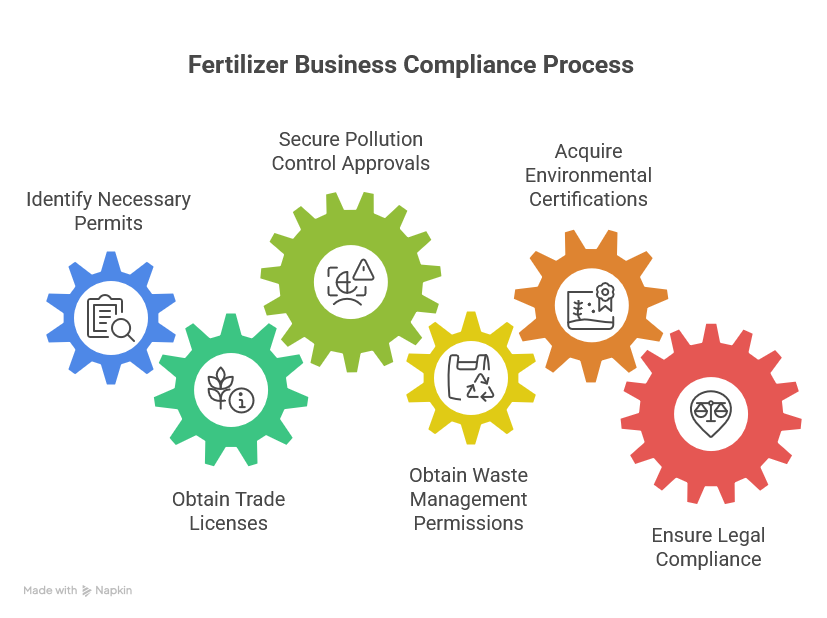
Before commencing operations, entrepreneurs should verify and obtain all necessary permits and licenses, which may include :
- Trade licenses specific to fertilizer production.
- Pollution control approvals.
- Waste management permissions.
- Environmental and agricultural certifications, if required.
Completing these formalities ensures legal compliance and facilitates smoother business operations.
Core Equipment and Machinery
The machinery required depends on the production scale and product type. Key equipment includes :
| Machine | Purpose | Typical Cost Range (USD) |
|---|---|---|
| Compost Mixer / Compost Turner | Aerates and blends raw materials to promote uniform composting | $1,000 – $3,000 |
| Crusher / Pulverizer | Breaks lumps and produces fine compost powder for better quality | $800 – $2,500 |
| Screening Machine | Removes larger particles to ensure smooth, high-quality final product | $700 – $1,500 |
| Weighing and Bag Filling Machine | Packs compost into bags ranging from 1 kg to 50 kg with accuracy | $1,200 – $3,500 |
| Granulator (optional) | Produces premium granulated fertilizer blends | $3,000 – $7,000 |
| Dryer (optional) | Dries granulated fertilizers to improve shelf life and handling | $2,000 – $6,000 |
A small to medium setup typically costs between $5,000 and $15,000 depending on the machinery and production capacity chosen. Entrepreneurs can scale their operations by adding optional equipment such as granulators and dryers to diversify product offerings.
Cost Efficiency and Operational Considerations
Because raw materials are often free or very inexpensive, production costs mainly involve labor, electricity, and machine maintenance. Processing costs typically range between $20 and $50 per ton. Efficient facility layout, proper equipment use, and adequate training can minimize operational costs and maximize output.
Packaging and Branding
Creating a clean and natural brand identity is crucial for market acceptance. Use earthy colors, clear labels, nutrient information, and usage instructions to build trust with customers. Packaging options can range from 1 kg, 5 kg, 10 kg, to bulk 50 kg bags.
Professional label designs can be created using free tools like Canva to enhance brand appeal and facilitate entry into nurseries, garden shops, and agricultural stores. Good packaging design not only improves shelf appeal but also enables higher selling prices.
Key Equipment and Machinery Required
Starting an organic fertilizer business requires careful selection of essential equipment to ensure efficient production and high-quality output. The core machinery focuses on processing raw materials like cow dung, plant residue, kitchen waste, crop leftovers, and poultry litter into consistent, nutrient-rich compost or fertilizer products. Below is an in-depth look at the key equipment necessary for a small to medium organic fertilizer setup.
Compost Mixer or Compost Turner
The compost mixer or compost turner is the heart of the production process. This machine blends and aerates the raw materials, ensuring optimal decomposition and consistent compost quality. Proper aeration helps maintain the right temperature and moisture levels, which is critical for producing high-quality organic fertilizer.
Depending on size and capacity, compost mixers or turners typically cost between $1,000 and $3,000. Choosing the right size depends on your daily production goals and available space.
Crusher or Pulverizer
Once the composting process is complete, it’s essential to break down any lumps and produce a fine, uniform powder. A crusher or pulverizer serves this purpose by pulverizing the compost into smaller particles, which improves nutrient availability and ease of use for the end customer.
This equipment generally costs between $800 and $2,500. It’s particularly useful if you aim to produce powdered compost or prepare the material for granulation.
Screening Machine
To ensure smooth texture and remove unwanted particles such as stones or large debris, a screening machine is used. This machine sieves the compost to guarantee a consistent product that meets market standards and customer expectations.
Screening machines are priced between $700 and $1,500, depending on capacity and features.
Weighing and Bag Filling Machine
Packaging is a critical step in branding and selling your organic fertilizer. A weighing and bag filling machine helps pack compost into bags ranging from 1 kg to 50 kg with precision. Automated filling improves productivity and reduces labor costs.
The cost for these machines ranges from $1,200 to $3,500. Investing in reliable packaging machinery not only streamlines operations but also enhances the professional appearance of your product.
Granulator and Dryer (Optional for Premium Products)
If you plan to diversify your product line by producing premium granulated fertilizers, additional machines are required :
- Granulator : Converts powdered compost into granules, making it easier to apply and store. Prices range from $3,000 to $7,000.
- Dryer : Removes moisture from granules to increase shelf life and prevent clumping. Dryers typically cost between $2,000 and $6,000.
These machines are ideal for scaling up production and offering value-added products that can command higher market prices.
Additional Setup Requirements
Besides machinery, your production facility should include :
- A shed of about 800 to 2,200 square feet with proper ventilation.
- Water connections and a simple drainage system to maintain hygiene and process efficiency.
- Designated zones for loading raw materials, mixing/composting, curing finished compost, and bagging/packaging.
- Basic tools like thermometers to monitor compost temperature and ensure quality control.
Maintaining hygiene is essential, especially when handling animal waste; use gloves, masks, and protective gear to ensure safety.
Summary of Key Equipment Costs
| Equipment | Purpose | Estimated Cost Range (USD) |
|---|---|---|
| Compost Mixer / Turner | Mixing and aerating raw materials | $1,000 – $3,000 |
| Crusher / Pulverizer | Breaking lumps, producing fine compost powder | $800 – $2,500 |
| Screening Machine | Removing particles for smooth final product | $700 – $1,500 |
| Weighing and Bag Filling Machine | Accurate packaging of compost into bags | $1,200 – $3,500 |
| Granulator (Optional) | Producing premium granulated fertilizer | $3,000 – $7,000 |
| Dryer (Optional) | Drying granules to improve shelf life | $2,000 – $6,000 |
For entrepreneurs seeking assistance in choosing machines or finding verified suppliers, expert guidance is available to ensure the right equipment matches production scale and budget.
—
Cost Analysis and Profitability of Organic Fertilizer Business
Understanding the financial aspects of an organic fertilizer business is crucial before launching. The business benefits from low raw material costs and growing demand, resulting in attractive profitability margins. This section breaks down the cost components and explores potential earnings based on typical production scales.
Raw Material Costs
One of the biggest advantages of the organic fertilizer industry is the availability of free or extremely cheap raw materials. Common inputs include :
- Cow dung
- Plant residues
- Kitchen waste
- Crop leftovers
- Poultry litter
Most of these materials are either discarded as waste or available at minimal cost, significantly reducing the overall production expenditure.
Processing Costs
Processing costs encompass labor, electricity, and other utilities required to operate machinery and manage production. On average, processing costs range from $20 to $50 per ton of organic fertilizer produced. This cost efficiency is due to the simplicity of the composting process and low-cost inputs.
Capital Investment
Initial investment primarily involves purchasing machinery and setting up the production facility. A small to medium setup generally requires an investment between $5,000 and $15,000. This includes the compost mixer, crusher, screening machine, bagging equipment, and optional granulator and dryer for premium products.
Facility costs, including shed construction or rental and utility setup, are additional but typically manageable for small-scale operations.
Revenue Potential
Market prices for organic fertilizer vary based on quality and form :
- Basic compost prices range between $100 and $250 per ton.
- Premium granulated blends can fetch prices above $300 per ton.
With a modest production capacity of 2 to 5 tons per day, a small unit can generate strong monthly revenues. For example, producing 3 tons daily at an average price of $150 per ton yields monthly gross sales of approximately $13,500.
Profitability and Payback Period
Due to low raw material costs and relatively low processing expenses, profit margins are high. Many small producers recover their full machinery investment within 2 to 6 months. This rapid payback period is facilitated by consistent year-round demand, driven by farmers, nurseries, landscapers, urban gardeners, and municipal parks.
As demand grows, adding premium products like vermicompost or seaweed-based fertilizers can increase profits further.
Operational Cost Breakdown Example
| Cost Component | Estimated Cost (per ton) | Notes |
|---|---|---|
| Raw Materials | $0 – $10 | Mostly free or minimal cost inputs |
| Labor | $10 – $20 | Depends on local wages and scale |
| Electricity & Utilities | $5 – $15 | Machinery operation and facility power |
| Packaging Materials | $5 – $10 | Bags, labels, sealing |
| Total Processing Cost | $20 – $50 | Excluding capital investment |
Marketing and Distribution Considerations
Profitability also depends on effective marketing strategies. Selling branded products with clear labeling and usage instructions can increase perceived value and selling price. Approaching local nurseries, garden centers, farms, and landscapers with trial packs and showcasing before-and-after soil improvement results can build trust and expand customer base.
Offering bulk deals and monthly subscription packs for home gardeners adds steady revenue streams. Additionally, social media marketing and participation in local agricultural forums enhance visibility and sales potential.
Scaling for Greater Profit
Once the business stabilizes, reinvesting profits into upgrading machinery, adding granulation and drying equipment, and expanding product lines can significantly increase production capacity and profit margins.
Automation and conveyor-based systems reduce labor costs while doubling output, making scaling profitable and sustainable in the long term.
Legal Requirements and Certifications
Compliance with legal and regulatory frameworks is an essential step when starting an organic fertilizer business. Meeting the necessary legal requirements and obtaining relevant certifications not only ensures smooth operations but also builds customer confidence and opens doors to wider markets.
Business Registration and Licensing
Before commencing operations, register your business locally according to the laws of your region. This may involve :
- Obtaining a trade license
- Registering your business name
- Filing for tax identification numbers or permits
Check with local government offices or business bureaus to understand the specific registration process and required documentation.
Environmental and Agricultural Permits
Handling organic waste and producing fertilizer may require environmental approvals such as :
- Pollution control approval
- Waste management permission
- Compliance with local environmental protection laws
These approvals ensure that your production methods do not harm the environment and that waste is managed responsibly. Regulations vary by country and region, so consult the relevant environmental agencies prior to starting operations.
Organic Certification
To market your product as organic, obtaining official organic certification may be necessary. Certifications typically validate that your fertilizer meets established standards for organic inputs and production processes. Benefits include :
- Enhanced market credibility
- Access to premium markets and export opportunities
- Eligibility for government grants or subsidies
Certification bodies vary by country but often require documentation of raw material sourcing, production methods, and quality control. Some common certifications include USDA Organic (USA), EU Organic, and various national organic programs.
Product Labeling and Packaging Regulations
Clear and accurate labeling is a legal requirement in many markets. Your packaging should include :
- Product name and brand
- Usage instructions
- Nutrient content highlights
- Manufacturer details and contact information
- Certification logos, if applicable
Good packaging design not only complies with regulations but also builds consumer trust and allows easy entry into retail outlets such as nurseries, garden shops, and agricultural stores.
Health and Safety Compliance
When handling organic waste, especially animal manure, ensure compliance with occupational health and safety regulations by :
- Providing protective gear like gloves and masks to workers
- Maintaining hygienic production environments
- Training staff on safe handling procedures
These measures reduce risks of contamination and workplace accidents, supporting sustainable business operations.
Government Grants and Support
Many countries, especially in Asia, Africa, the EU, and the US, provide grants or subsidies for eco-friendly businesses such as organic fertilizer production. These incentives may be available for :
- Setting up composting units
- Vermicompost farms
- Biofertilizer projects
Applying for such funding requires compliance with specific guidelines, including certifications and documented environmental benefits. Leveraging these programs can significantly reduce startup costs and improve profitability.
Summary of Legal Compliance Checklist
- Register your business and obtain trade licenses
- Secure environmental and waste management permits
- Apply for organic certification if marketing as organic fertilizer
- Ensure product labeling meets regulatory requirements
- Implement health and safety protocols for staff
- Explore government grants or funding opportunities
Consulting with legal experts or local agricultural departments can help navigate these requirements smoothly and avoid potential legal issues.
Branding, Packaging, and Marketing Strategies
Creating a strong brand identity, developing attractive packaging, and implementing effective marketing strategies are crucial steps to establish a successful organic fertilizer business in 2026. These elements not only build trust with your customers but also help differentiate your products in a competitive marketplace.
Building a Clean, Natural Brand Identity
Branding should reflect the eco-friendly nature of organic fertilizers. Use earthy colors and natural tones in your logo and packaging design to communicate your commitment to sustainable agriculture. Clear labeling with essential information such as nutrient content, usage instructions, and benefits of the product will help customers make informed decisions.
Good packaging design instantly builds trust and professionalism. For instance, professional labels on 1 kg, 5 kg, 10 kg, and bulk 50 kg bags can significantly increase the perceived value of your products and enable easier entry into nurseries, garden shops, and agricultural stores.
Packaging Solutions for Different Market Segments
Packaging plays a vital role in marketing and product preservation. Here are some key considerations :
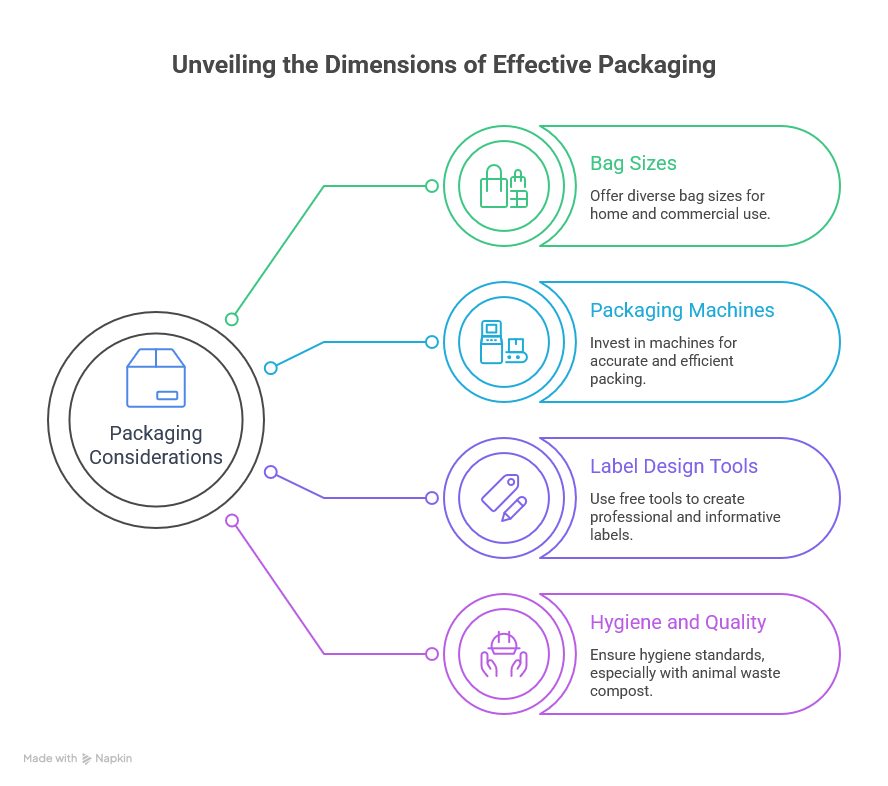
- Bag Sizes : Offer multiple packaging sizes including small bags (1 kg, 5 kg, 10 kg) for home gardeners and bulk bags (up to 50 kg) for commercial farms and nurseries.
- Packaging Machines : Investing in weighing and bag filling machines ensures accuracy and speed in packing. These machines typically cost between $1,200 and $3,500.
- Label Design Tools : Utilize free tools like Canva to design professional labels that highlight the product’s organic nature and usage benefits.
- Hygiene and Quality : Maintain hygiene standards during packaging by using gloves, masks, and protective gear especially when handling animal waste-based compost.
Effective Marketing Strategies
Marketing your organic fertilizer requires a multi-channel approach to reach diverse customer segments :
- Local Outreach : Start by approaching local nurseries, garden centers, landscapers, greenhouse owners, and farms. Provide trial packs and demonstrate results through before-and-after soil quality comparisons.
- Digital Marketing : Create simple videos showcasing your composting process, packaging, and customer testimonials. Share these videos on social media platforms such as Facebook, Instagram, and YouTube, as well as agriculture forums.
- Community Promotion : Engage with local markets, dairy farms, poultry farms, and vegetable markets. These locations not only supply raw materials but also potential buyers.
- Bulk Deals and Subscription Models : Offer bulk purchase discounts to farmers and monthly subscription packs for home gardeners to build recurring revenue streams.
Building a brand is about consistent quality and engaging storytelling. A well-branded fertilizer pack can command higher prices and establish long-term relationships with buyers.
Customer Segments and Sales Channels
Understanding your customer base and establishing the right sales channels are essential for sustainable growth in the organic fertilizer industry. The demand for organic fertilizers is rising sharply due to the shift towards sustainable farming practices worldwide, creating diverse opportunities across multiple segments.
Key Customer Segments
The primary customers for organic fertilizers include :
- Commercial Farms : Large-scale farms prioritizing soil health and sustainable crop production are consistent buyers requiring bulk quantities.
- Nurseries and Garden Centers : These customers need smaller packaged fertilizers for plants and landscaping purposes.
- Landscapers and Greenhouse Owners : Professional landscapers and greenhouse operators demand reliable organic inputs for quality results.
- Urban Gardeners and Home Gardeners : This segment prefers small, user-friendly packaging and subscription models for regular supply.
- Municipal Parks and Public Gardens : Government and local bodies managing parks increasingly adopt organic solutions for soil restoration.
Sales Channels to Explore
Reaching these customer segments requires a mix of direct and indirect sales channels :
- Direct Sales : Personal visits to farms, nurseries, and landscapers allow you to build relationships and offer trial packs to showcase product effectiveness.
- Retail Outlets : Partnering with garden shops and agricultural stores helps increase product visibility and accessibility for small-scale buyers.
- Online Platforms : Utilize social media and agriculture-specific forums to market your products and receive orders from a wider geographic area.
- Bulk Supply Agreements : Establish contracts with large farms and landscaping companies for regular bulk supply, ensuring steady revenue.
- Subscription Models : Develop monthly subscription packs for home gardeners and bulk monthly contracts for farms, providing convenience and customer retention.
Example of Customer Engagement
A farmer in the Philippines started with a small composting shed producing a few hundred kilograms weekly, mainly selling to nearby gardeners and a local nursery. As demand increased, he invested in pulverizing and screening machines to improve output and quality. Within a year, he expanded sales to farm stores across two districts and branded his product for local garden shops. This approach demonstrates the effectiveness of starting small, focusing on quality, and progressively expanding customer reach.
Scaling Up and Product Diversification Opportunities
Once your organic fertilizer production stabilizes, scaling up and diversifying your product portfolio are key strategies to increase profitability and market share. The organic fertilizer market offers numerous avenues for expansion due to the growing demand for sustainable and premium soil amendments.
Scaling Up Production
Increasing production capacity involves investment in advanced machinery and optimizing processes to maintain consistent quality while minimizing labor costs :
- Automation : Implement conveyor-based setups and automated compost mixers or turners to improve efficiency and double production without proportionally increasing labor.
- Additional Equipment : Adding crushers, pulverizers, screening machines, granulators, and dryers can enhance the quality and variety of your output.
- Workforce Expansion : Hiring additional staff for packaging, quality control, and distribution helps manage increased production volumes.
- Facility Expansion : Increasing the size of your composting shed or establishing additional units supports higher output and storage capacity.
Product Diversification Opportunities
Diversifying your product range enables targeting different customer needs and price points :
| Product Type | Description | Benefits | Additional Equipment Needed |
|---|---|---|---|
| Premium Blends | Combinations of vermicompost, seaweed-based fertilizers, biofertilizer mixes, and soil enhancers. | Higher nutrient content, improved soil health benefits, and premium pricing. | Blending machines, granulators, driers. |
| Granulated Fertilizers | Fine granules that are easier to apply and store. | Improved handling and longer shelf life. | Granulator, dryer. |
| Soil Enhancer Granules | Specialized formulations aimed at enhancing soil microbial activity and fertility. | Targeted soil health improvement for specific crops or conditions. | Blending and granulation equipment. |
Subscription and Contract Models
Developing subscription-based sales models can secure recurring revenue streams and strengthen customer loyalty :
- Home Gardeners : Monthly subscription packs of organic fertilizer tailored for small-scale use.
- Commercial Farms : Bulk monthly contracts ensuring consistent supply aligned with their crop cycles.
- Landscaping Companies : Partnership agreements providing regular delivery for landscaping projects.
Building a Trusted Brand for Expansion
Scaling up is easier once a trusted brand reputation is established. Consistent product quality, effective marketing, and good customer service create a solid foundation for growth. As your brand gains recognition, it becomes simpler to negotiate bulk deals, enter new markets, and explore export opportunities.
By combining increased production capacity with diversified products and innovative sales models, entrepreneurs can transform a simple composting unit into a profitable fertilizer brand with long-term sustainability and growth potential.
Final Thoughts
Launching an organic fertilizer business taps into a growing, purpose-driven market with solid margins and environmental impact. With global demand rising and entry costs accessible (especially small-scale), disciplined execution can lead to profitability within 1-2 years.
Start with thorough research, secure compliance, and focus on quality—your sustainable venture could thrive amid the push for greener agriculture. Research local opportunities today and consult experts to get started!